Designing a Scalable UI
for Hyatt's Authoring Tool
Role
Lead Product Designer
Company
Hyatt Hotels Corporation
Timeline
2021–2023
Status
Shipped · In active use
Overview
What is this?
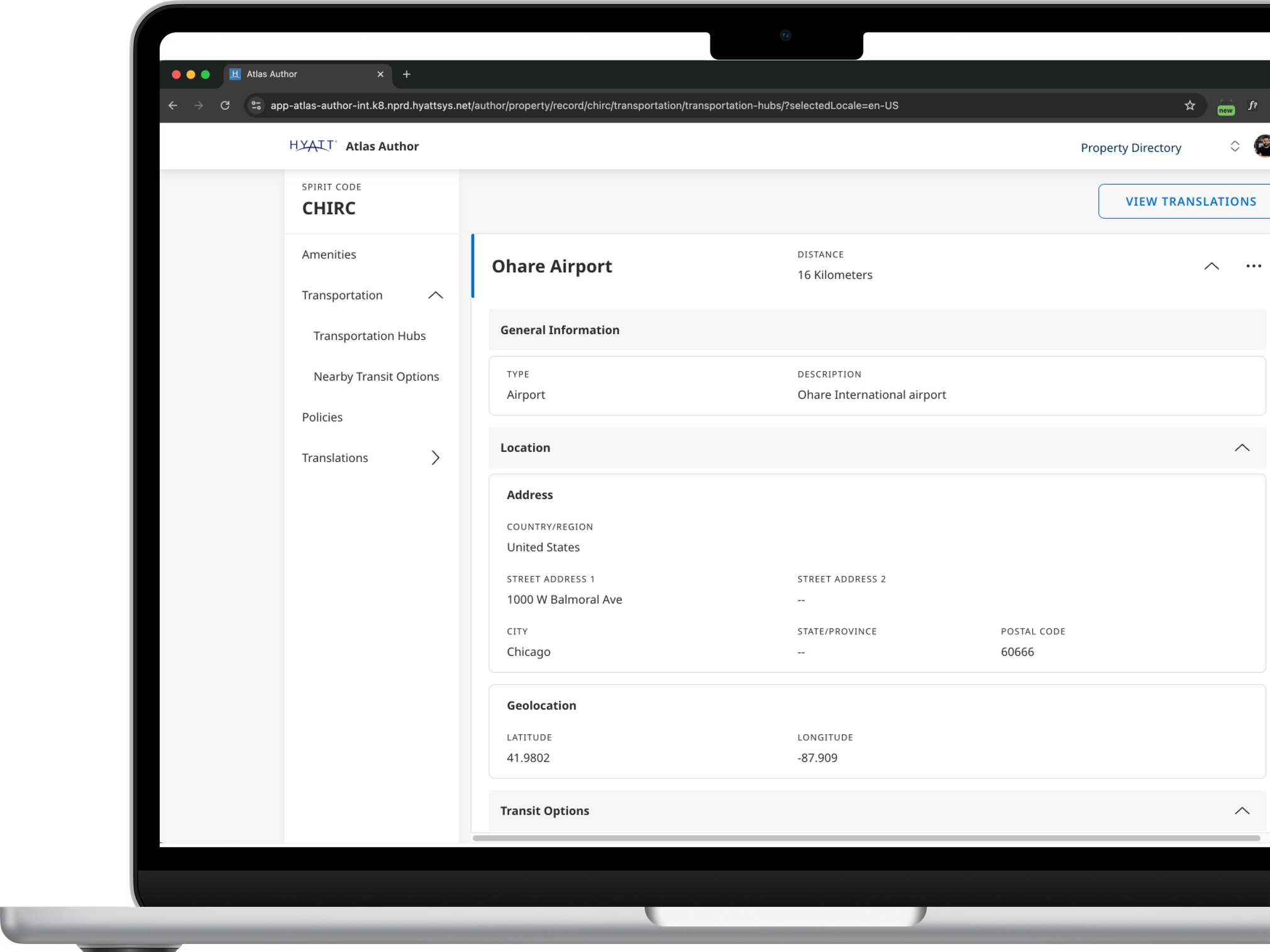
Titan (Atlas Author) is Hyatt's internal property data management platform — the tool used by Hyatt's Digital Content team to manage, update, and publish information across 1,400+ properties worldwide. Think amenities, policies, transportation hubs, and property descriptions: everything that surfaces on Hyatt.com and in the World of Hyatt app starts here.
The legacy system (App-Atlas) was aging out. Titan was a 0→1 project: genuinely new infrastructure, built from the ground up to replace it. I joined the project at an early exploration stage, inherited a set of hi-fi wireframes from the previous designer, and made a decision that would shape the entire project: set them aside and start with research.
The problem
The wrong foundation.
The previous designer had been pulling components from the World of Hyatt consumer design library — the same system used for the guest-facing app and website. On the surface, that made sense: it was Hyatt's design system, already built and maintained. But it was the wrong fit.
Titan is an enterprise internal tool. Its users are Digital Content specialists — expert operators who spend hours in the tool every day. Their needs are fundamentally different from a guest browsing hotel options on a phone. They need density, efficiency, and clarity at scale. A consumer-facing component library wasn't designed for that.
I reset to research. The team was receptive — and what we learned in those early sessions shaped every decision that followed.
Process
The workshop that scoped the MVP.
I facilitated Hyatt's first-ever stakeholder prioritization workshop with the Digital Content team. The format: a 2×2 matrix plotting importance versus feasibility for every potential feature and data module. It wasn't a design session — it was an alignment session. And it worked.
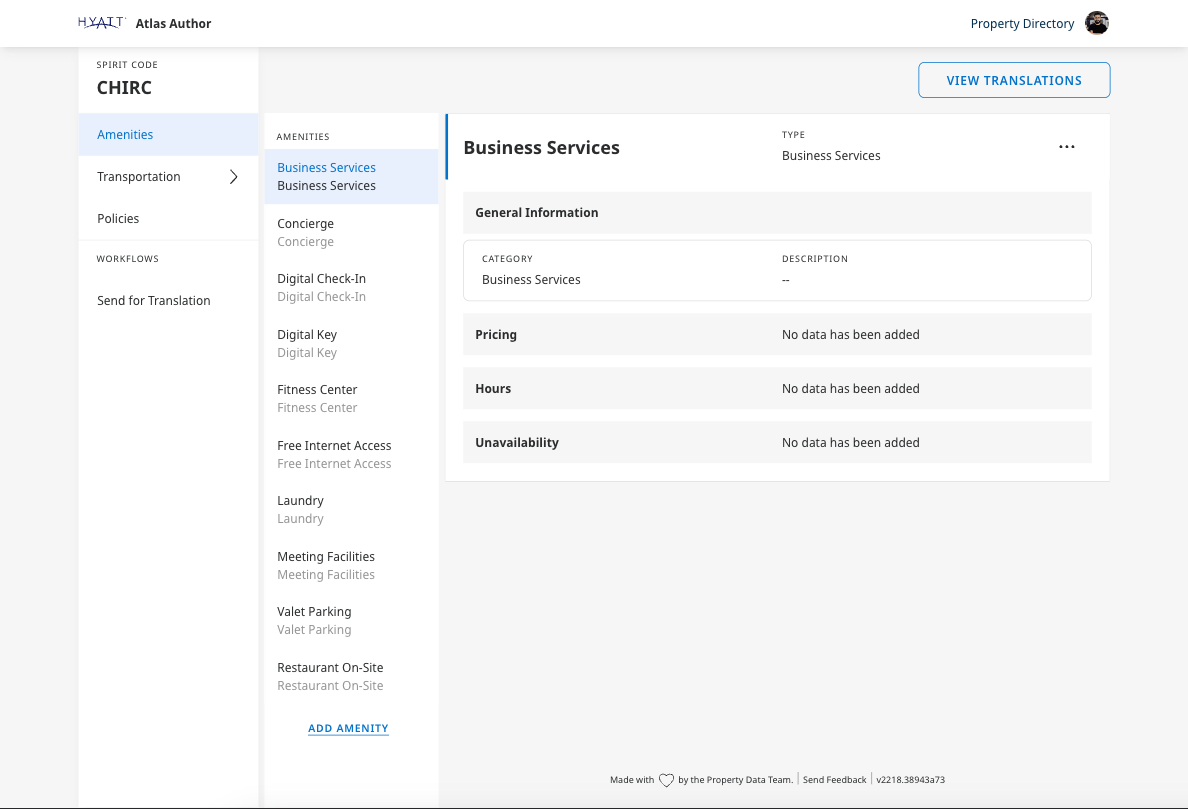
The workshop directly produced the MVP scope: Policies, Amenities, and Transportation Hubs. Three modules that covered the highest-value, most-actionable content for the team — and were achievable within the project constraints. Everything else went to the backlog with clear prioritization rationale attached.
I also built a Storybook component library aligned specifically to Titan's enterprise context. That work didn't stay contained to the project — it became foundational to Hyatt's enterprise design system organization-wide.
Design
Built for experts, not first-timers.
The Titan UI is designed for someone who knows what they're doing. That means information density where it matters, collapsible sections to reduce cognitive load, clear empty states for untouched modules, and structured data entry patterns that match how the Digital Content team actually thinks about property information.
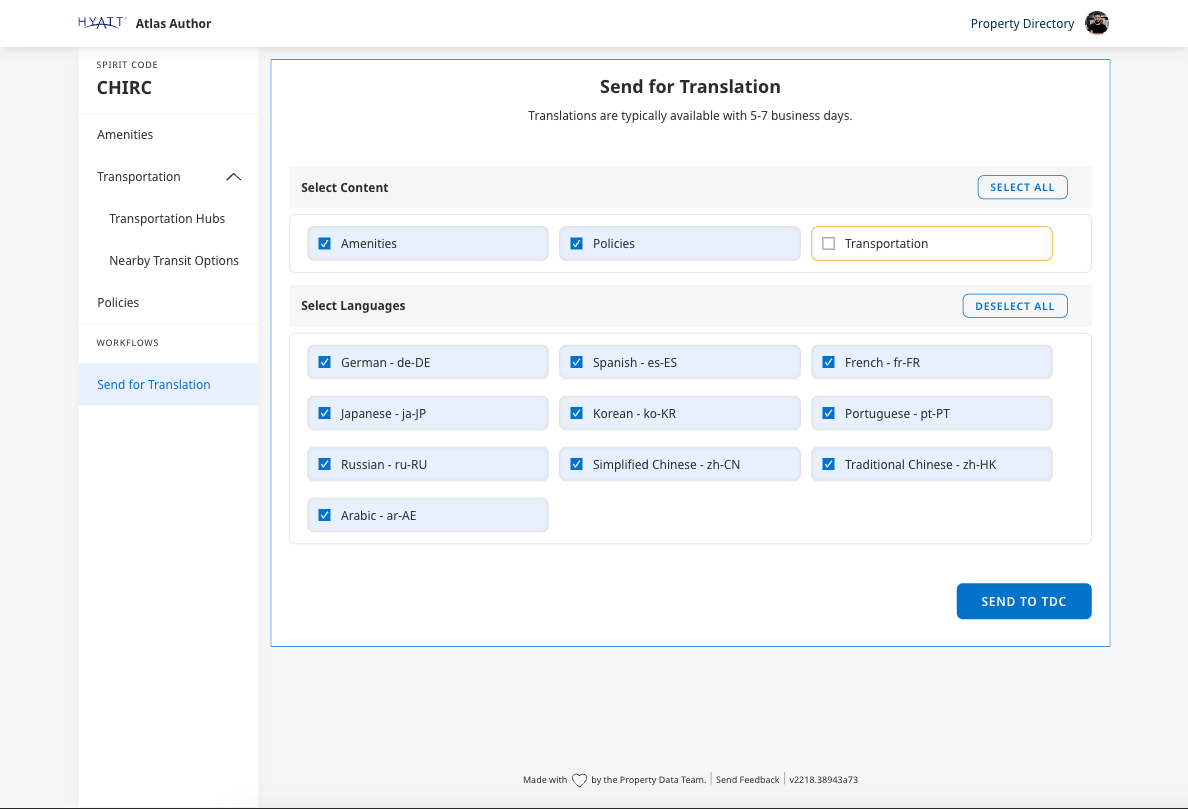
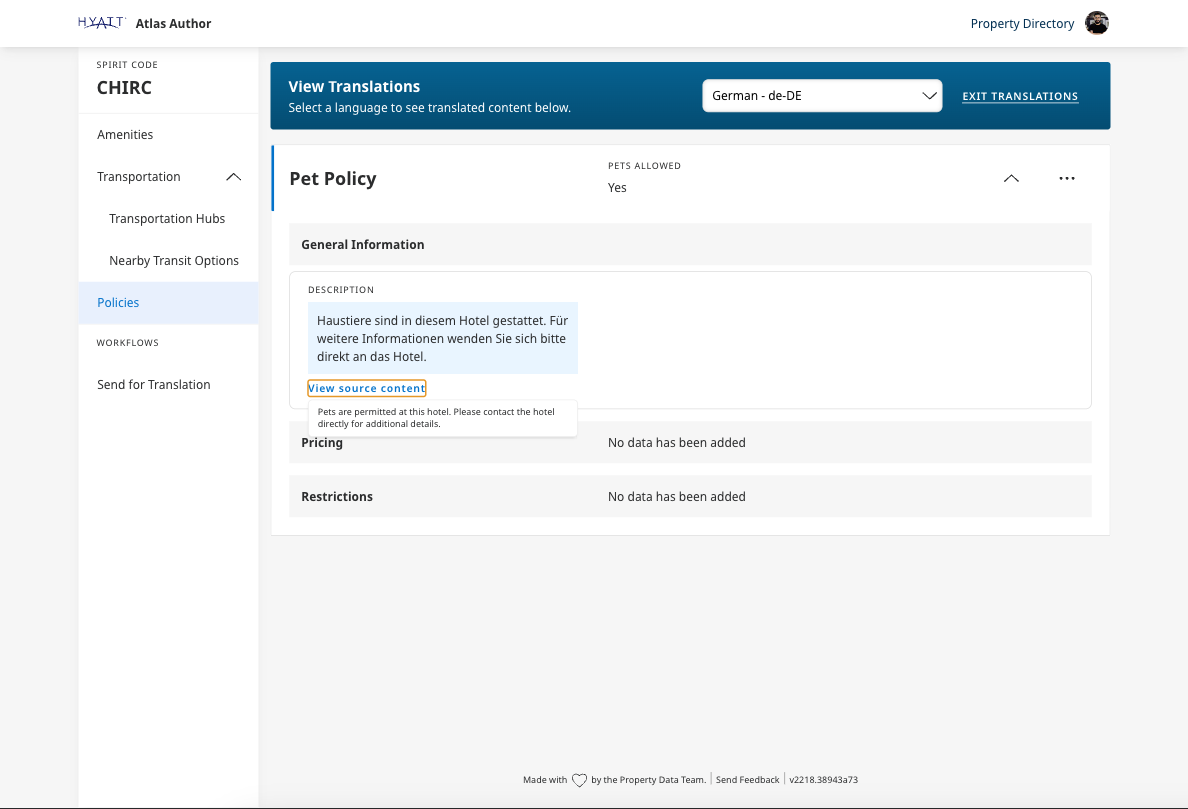
The translation workflow — which allows specialists to select content and send it to any of nine languages — was one of the most complex design challenges on the project. It required a pattern that could handle multi-select, surfaced the source-versus-translated view clearly, and gave specialists confidence that nothing would get lost in the handoff to the localization team.
Outcome
The work didn't stop when I left.
Titan was successfully deployed and adopted by Hyatt's Digital Content team. The MVP established the foundation for a continued migration of the full property data platform. The team was satisfied with the tool — and the work didn't stop when I left. That's the mark of something that actually worked.
"A shining example of Nelson's impact is his work on the Property Data Management System. He seamlessly combined his creativity and strategic thinking to design a scalable system that optimized data workflows while prioritizing ease of use. His meticulous attention to detail ensured the solution was not only functional but delightful for stakeholders across multiple teams."